Showing posts with label or. Show all posts
Showing posts with label or. Show all posts
Saturday, April 15, 2017
Vmware Certificate renew and Hostname or IP has changed Regenerating the self signed certificates
Vmware Certificate renew and Hostname or IP has changed Regenerating the self signed certificates
I was not able to connect to vCenter Server Appliance, so I restarted it.
After that it showed that it will be renewed ssl certificates because VCSA wasnït restarted for a long period (more than one year in this case).
Later in console I got stuck on:
Hostname or IP has changed. Regenerating the self-signed certificates.
Starting VMware vPostgres: ok
Waiting for the embedded database to start up: .[OK]
Starting VMware vPostgres: ok
Waiting for the embedded database to start up: .[OK]
Issue was solved using this article:
http://adminafterwork.com/
Available link for download

Saturday, April 8, 2017
Windows 8 hangs or freezes whenever search for anything
Windows 8 hangs or freezes whenever search for anything
Issue: Whenever you try to search for an Apps or something windows hangs or freezes and you have to either reboot or log out to get control of my computer back.
Symptoms:
1. My computer freezes whenever I try to view my apps or use the search function. When I click "apps" or attempt to search for anything, the computer hangs up for about 5 seconds, then returns back to the home metro screen. This means I have no way of opening apps unless return to the desktop, open explorer, and search manually for the executable. Needless to say, this is even more inconvenient than not having a start menu to begin with.
2. Search Within an Explorer Window
I press the search button, and it never responds.Or if I try the search box for searching something within the current opened explorer window, system hangs.I end up having to (again) close the Explorer window manually. This sometimes causes the entire shell and Start menu to crash, sometimes, it doesnt.
3. If I go to the start page (Windows 8) and start typing, Ill get results for Apps and Settings but not for Files. It cant find any files, on any drive. If I click on the "Files" sub option while running the search (or even after the search ends), I get some spinning circles and the start menu becomes non-responsive. I have to either reboot or log out to get control of my computer back.
Causes:
The reasons freezing could be many, and the solutions could be many too!
However there are some most common and major reasons for freezing issue which are mentioned below.
- Windows Search service failed to start correctly.
- Corrupt system files due to abrupt shutdown.
- Missing system files due to accidental deletion.
- Inappropriate application installation.
- Corrupt hardware device driver files.
- Invalid registry entries, etc.
- Malware or Spyware infection.
First of all you should really check the windows search service as this service is used by windows to index (organise) all of your files. when it fails to start the search feature in the start screen waits for the service to start, if the service does not start you end up in a never-ending state of waiting which causes system hangs or freezing.
The ?Windows Search? service can some times fail to start if you have a faulty memory card, memory stick, external hard drive etc. plugged in.
Solution:
1. Microsoft Fix-it
For those of you with better luck than I have here is the link to the automated solution which may solve the issue.
https://support.microsoft.com/en-us/mats/windows_search/en-us
2. Fix Windows Search and Indexing
1. Navigate to Control Panel.
2. Click "Programs" then "Programs and Features".
3. Click "Turn Windows features on or off" on the left side of the list.

4. Uncheck "Windows Search" and hit "OK". You will be prompted to restart.
5. After restart, repeat these steps and check the box to turn this feature back on.
If the above did not work continue here:
Restart the Windows Search Service
Rebuild the Index
Whenever you try to search for something in windows, its indexing which find the things quickly and brings that to you.If indexing is disabled or corrupt computer wont be able to search and will not present the search results.Windows uses the index to perform very fast searches on your computer.
The index requires almost no maintenance. However, if the index cant find a file that you know exists in an indexed location, you might need to rebuild the index. Rebuilding the index can take several hours, and searches might be incomplete until the index is fully rebuilt.

For more information on Advance indexing option you can read article on microsofts website http://windows.microsoft.com/en-in/windows7/change-advanced-indexing-options
Restart the Windows Search Service
- Press ?Windows + R?
- Type ?services.msc? and click ?OK?
- Find the ?Windows Search? service and right click and select ?Properties?
- On the General tab set the ?Startup type:? to ?Automatic?
- If the service status is stopped click the ?Start? button.
- If the service is stuck on ?Starting?? you should try unplugging any USB Mass Storage Device (external hard drives or thumb drives, any kind of memory card (ie SD card compact flash etc.)
- Reboot
Rebuild the Index
Whenever you try to search for something in windows, its indexing which find the things quickly and brings that to you.If indexing is disabled or corrupt computer wont be able to search and will not present the search results.Windows uses the index to perform very fast searches on your computer.
The index requires almost no maintenance. However, if the index cant find a file that you know exists in an indexed location, you might need to rebuild the index. Rebuilding the index can take several hours, and searches might be incomplete until the index is fully rebuilt.
- Go to Control panel and open Indexing Options.
- Click the Advanced button at the bottom of the Indexing Options window. This displays a new window titled Advanced Options.
- Click the Index Settings tab if it isn?t selected already.
- Click the Rebuild button to delete and rebuild the file index.
- Click OK to confirm.
For more information on Advance indexing option you can read article on microsofts website http://windows.microsoft.com/en-in/windows7/change-advanced-indexing-options
Step 2 will always fix this issue but just in case its not helpful try the next Step 3.
3.Check the Registry Value
Manual Fix 1
1. Press Windows Key + R to get the run dialogue box.
2. Type "regedit.exe" in the box and hit enter.
3. Using the box on the left, navigate to the following directory:
HKEY_CURRENT_USERSoftwareMicrosoftWindowsCurrentVersionExplorerAdvanced
4. We need to change a registry called "Start_SearchFiles" to a value of 2. If you are like me, yours is already 2. We need to reset this so what we are going to do it change it to 0, then back to 2.
5. Double-click Start_SearchFiles or right-click and select "Modify" to get the edit box. Change the number under "Value data" to 0 then click "Ok".
6. Repeat step 5, changing the value back to 2.
7. Restart your computer.
Manual Fix 2
Using the above information navigate to the following directory:
HKEY_LOCAL_MACHINESOFTWAREMicrosoftWindowsCurrentVersionExplorerFolderTypes
And delete the following folder: {ef87b4cb-f2ce-4785-8658-4ca6c63e38c6}. After deleting the folder restart your computer.
****************************
People also read following top most searched issues
Best Google Search Tips and Tricks
Windows takes long time or ages to shut down
how to fix Weather gadget could not connect to service
How to start Installer,Print spooler,windows Audio or any other services in safe mode
Read how to fix black screen with only mouse cursor issue- Explorer.exe does not start automatically
Fix USB 3.0 External Hard drive installation issue ( Not detecting in Windows )
What is a website and how is it accessed on the web?How to build and host it free?
Available link for download
Thursday, March 16, 2017
Windows takes long time or ages to shut down
Windows takes long time or ages to shut down
If you have a brand new 3 - 4 months old computer which runs a lot faster and turn on very fast within few seconds but extremely slow to shut down that would be the most frustrating situation because every time you want to restart the computer after making any changes to it or lets say you have made some changes or updated any software which requires you to restart the computer thats when it becomes pain in the ass.
Here in this article we will be learning the reason why windows takes long time or ages to shut down and how to fix the slow shut down.
Issue:
Slow shut down.
Windows takes a long time to shut down.
Windows does not shut down forever.
Windows is extremely slow to shut down.
A circle in blue background keeps moving around during shut down.
Page file is the Virtual memory of your computer or you can say an extension for your memory stick-RAM that is allocated on Hard Drive of your computer.Windows OS swap pages of memory to disk when they are not used. On a running system, this pagefile is opened exclusively by the operating system, and it is well protected. However, systems that are configured to allow booting to other operating systems might have to make sure that the system pagefile is wiped clean when this system shuts down. This ensures that sensitive information from process memory that might go into the pagefile is not available to an unauthorized user who manages to directly access the pagefile.This virtual memory is maintained in a file called pagefile.sys located in root drive normally C: drive.
When this option is enabled for security reason, it causes the system pagefile to be cleared upon clean shutdown. This takes considerable time of the Operating System to flush-out the pagefile, thus causing the slow shut down.
Disable the clearing Pagefile at shut down option to increase the shut down speed.
Open regedit.exe and go to the following directory:
HKEY_LOCAL_MACHINESYSTEMCurrentControlSetControlSession ManagerMemory Management
Now, Find the registry entry named ClearPageFileAtShutdown in the right pane. If it is set to 1 it is enabled, and may delay the shut down process. Right-click it, select Modify, and change the value to 0.This will most of the time fix the slow shut down problem.
When you give command to shuts down, Windows attempts to properly close all running processes. If a service doesn?t close immediately, Windows waits for a few seconds, until it prompts the user that the service is not responding to the shutdown request. The amount of this waiting time is defined by registry keys and you can reduce it.
Please follow the steps outlined in this article, it should in no way harm your system otherwise improper editing the of registry can cause system to crash.Here are few registry hacks that you need to do.
1. Navigate to the following registry key
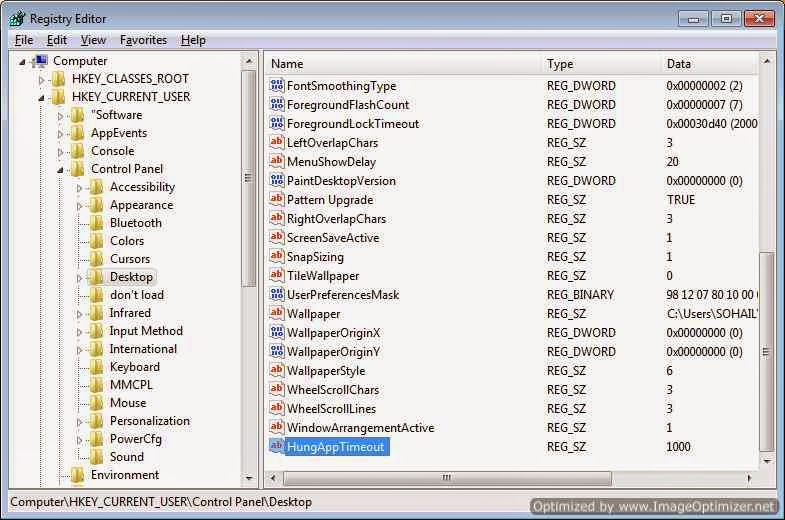
HKEY_CURRENT_USERControl PanelDesktop
On the right, find and double-click the string > WaitToKillAppTimeout.
If this entry does not exist, you can create it. Right-click into the folder and click > New > String Value, and name it > WaitToKillAppTimeout and change its value to 1000..
if you see an entry called > AutoEndTasks, set its value data to 1.You can create one if it is not there.
Similarly change the value for HungAppTimeout registry key to 1000.
The second part of this tip changes the same settings, this time for all users on the system.
2. Navigate to HKEY_USERS.DEFAULTControl PanelDesktop
Highlight the WaitToKillAppTimeout value.
Set it to 1000 (the default should be 20000).
Now highlight the HungAppTimeout value.
Set it to 1000 also.
Highlight the AutoEndTasks value.
set it to 1.Windows will now be able to close hung applications without user input during the shutdown process.
In the third tip, we will alter a second registry setting to decrease the amount of time Windows will wait before shutting down active services after receiving a shut down command.this would help a lot to fix slow shut down problem.
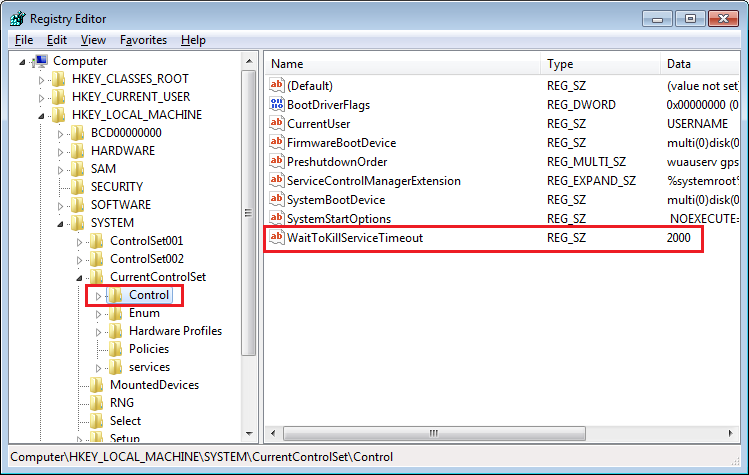
3. Navigate to HKEY_LOCAL_MACHINESystemCurrentControlSetControl
Highlight the value WaitToKillServiceTimeout
Change this value to 1000.
this registry key plays vital role in fixing slow shut down problem
After you are in command prompt type the following commands.
1) net stop wuauserv
2) cd /d %windir%SoftwareDistribution
3) rd /s DataStore
4) net start wuauserv
Your computer might have slow shut down issue because of another computer on a home network accessing the hard drive on this one, or the use of P2P file sharing like torrents or Limewire, or similar. We dont recommend using such file sharers because of the piracy aspect and risk of malware infected files.
Disconnect any share drive or network drive located on your computer before shutting down and properly stop the services of P2P file sharing programs like torrents or Limewire or similar from task manager.You should also uncheck these program from the startup items list in control panel>Adminitrative Tools > System Configuration.
Microsoft keeps releasing the updates and patches for all the windows operating system to cover up glitches or loopholes in its operating system and if you have missed out on any patch which might be directly or indirectly associated with the cause of Slow shut down then you might think of downloading the related hotfix.Below are four important hotfixes.
i.] Hotfix 1 - Download
Hotfixed is used when "There is a delay when you shut down, restart, or log off a computer that is running Windows 7 or Windows Server 2008 R2" and if you have the following symptoms.
SYMPTOMS
When you try to restart, logoff or shut down your Windows 7 or Windows Server 2008 R2.
the logoff process stops for about six seconds. Additionally, you receive the following message:
1 program still needs to close:
(Waiting for) Task Host Window
Cause: This problem occurs because the TaskHost.exe process stops handling messages during system shutdown, during system restart, and during system logoff causing slow shut down.
Important:
A hotfix is intended to correct a specific problem.
Apply the hotfix only to systems that are experiencing the specific problem.
Installing the incorrect hotfix can cause damage to your system.
Hotfixes are included in subsequent service packs that are safer to install through Microsoft Update
ii ] Hotfix 2 for Windows 2000, Windows Server 2003, Windows XP- Download
A service to help with slow shut down and unreconciled profile problems.
You may be having profile unload problems if you experience slow logoff or slow shut down (with Saving Settings for most of the time while logging off). UPHClean is a service that once and for all gets rid of problems with user profile not unloading.
The User Profile Hive Cleanup service(UPHClean) helps to ensure user sessions are completely terminated when a user logs off which causes slow shut down. System processes and applications occasionally maintain connections to registry keys in the user profile after a user logs off. In those cases the user session is prevented from completely ending. This can result in problems when using Roaming User Profiles in a server environment.
iii] Hotfix 3 for Windows XP- Download
SYMPTOMS
The shut down procedure on certain hardware configurations can take up to 15 minutes to complete.
For example, the Toshiba Satellite 5200 laptop computer that is equipped with a universal serial bus (USB) 1.1 mouse can demonstrate this problem.
CAUSE
This problem occurs because of an issue with the Microsoft Windows XP audio service which causes slow shut down.
RESOLUTION
The audio service has been updated to correct this problem.To resolve this problem, you could also obtain the latest service pack for Windows XP.
You have a computer that is running Windows 7 RTM. When the system is under heavy load, you may encounter one or more of the following problems:
The hotkey on your keyboard does not work. For example, you press the hotkey to control the brightness of your computer screen. However, the level of brightness does not change.
Windows 7 stops responding when you shut down the computer or put the computer into Sleep.
This problem frequently occurs on computers that have multiple processors or that have a processor with multiple cores.
Note: The issue is fixed in Windows 7 Service Pack 1
Sometimes when you try to shut down the computer it shows the message
Read more »
Here in this article we will be learning the reason why windows takes long time or ages to shut down and how to fix the slow shut down.
Issue:
Slow shut down.
Windows takes a long time to shut down.
Windows does not shut down forever.
Windows is extremely slow to shut down.
A circle in blue background keeps moving around during shut down.
Reason of slow shut down and troubleshooting
Shutting down windows is not as simple as turning the computer or any other electronic device off.when you give command to shut down the changes to the Operating System must be saved,System processes must end, data must be saved,unwanted information must be removed from memory and all the network connection must end.
Usually, this process takes just a few seconds, but the complex series of steps that take place behind the scenes can sometimes trip over itself and slow the shut down process.The result is a system that never actually shuts down, or takes an extremely long time to shut down.It really irritates when you have to go to some party and your machine keeps you intact due to its lazy shut down.Here are the reasons why your Windows 7 or Windows 8/8.1 PC might not shut down, and how to fix it.
1. Page File Problems causing very slow shut down
Page file is the Virtual memory of your computer or you can say an extension for your memory stick-RAM that is allocated on Hard Drive of your computer.Windows OS swap pages of memory to disk when they are not used. On a running system, this pagefile is opened exclusively by the operating system, and it is well protected. However, systems that are configured to allow booting to other operating systems might have to make sure that the system pagefile is wiped clean when this system shuts down. This ensures that sensitive information from process memory that might go into the pagefile is not available to an unauthorized user who manages to directly access the pagefile.This virtual memory is maintained in a file called pagefile.sys located in root drive normally C: drive.
When this option is enabled for security reason, it causes the system pagefile to be cleared upon clean shutdown. This takes considerable time of the Operating System to flush-out the pagefile, thus causing the slow shut down.
Disable the clearing Pagefile at shut down option to increase the shut down speed.
Open regedit.exe and go to the following directory:
HKEY_LOCAL_MACHINESYSTEMCurrentControlSetControlSession ManagerMemory Management
 |
| Slow Shut Down Cause |
Now, Find the registry entry named ClearPageFileAtShutdown in the right pane. If it is set to 1 it is enabled, and may delay the shut down process. Right-click it, select Modify, and change the value to 0.This will most of the time fix the slow shut down problem.
2. Tweak registry to reduce timeout to kill services or Apps to fix slow shut down.
When you give command to shuts down, Windows attempts to properly close all running processes. If a service doesn?t close immediately, Windows waits for a few seconds, until it prompts the user that the service is not responding to the shutdown request. The amount of this waiting time is defined by registry keys and you can reduce it.
Please follow the steps outlined in this article, it should in no way harm your system otherwise improper editing the of registry can cause system to crash.Here are few registry hacks that you need to do.
1. Navigate to the following registry key
HKEY_CURRENT_USERControl PanelDesktop
On the right, find and double-click the string > WaitToKillAppTimeout.
If this entry does not exist, you can create it. Right-click into the folder and click > New > String Value, and name it > WaitToKillAppTimeout and change its value to 1000..
if you see an entry called > AutoEndTasks, set its value data to 1.You can create one if it is not there.
 |
| Slow Shut Down Caused by Registry |
Similarly change the value for HungAppTimeout registry key to 1000.
The second part of this tip changes the same settings, this time for all users on the system.
2. Navigate to HKEY_USERS.DEFAULTControl PanelDesktop
Highlight the WaitToKillAppTimeout value.
Set it to 1000 (the default should be 20000).
Now highlight the HungAppTimeout value.
Set it to 1000 also.
Highlight the AutoEndTasks value.
set it to 1.Windows will now be able to close hung applications without user input during the shutdown process.
In the third tip, we will alter a second registry setting to decrease the amount of time Windows will wait before shutting down active services after receiving a shut down command.this would help a lot to fix slow shut down problem.
3. Navigate to HKEY_LOCAL_MACHINESystemCurrentControlSetControl
Highlight the value WaitToKillServiceTimeout
Change this value to 1000.
 |
| Slow shut down caused by registry |
this registry key plays vital role in fixing slow shut down problem
3. Windows Automatic Update Service glitch causes slow shutdown
Sometimes automatic update error also causes slow shutdown.Click on Start - run - type CMD and command prompt will appear right click on CMD.exe on top and select run as administrator. .After you are in command prompt type the following commands.
1) net stop wuauserv
2) cd /d %windir%SoftwareDistribution
3) rd /s DataStore
4) net start wuauserv
4. Network problems.
Your computer might have slow shut down issue because of another computer on a home network accessing the hard drive on this one, or the use of P2P file sharing like torrents or Limewire, or similar. We dont recommend using such file sharers because of the piracy aspect and risk of malware infected files.
Disconnect any share drive or network drive located on your computer before shutting down and properly stop the services of P2P file sharing programs like torrents or Limewire or similar from task manager.You should also uncheck these program from the startup items list in control panel>Adminitrative Tools > System Configuration.
5. Loopholes or know issue in Windows Operating System causing slow shut down
Your windows could also have slow shut down issue because of known glitch which needs to be taken care of by installing hotfix released by microsoft.Microsoft keeps releasing the updates and patches for all the windows operating system to cover up glitches or loopholes in its operating system and if you have missed out on any patch which might be directly or indirectly associated with the cause of Slow shut down then you might think of downloading the related hotfix.Below are four important hotfixes.
i.] Hotfix 1 - Download
Hotfixed is used when "There is a delay when you shut down, restart, or log off a computer that is running Windows 7 or Windows Server 2008 R2" and if you have the following symptoms.
SYMPTOMS
When you try to restart, logoff or shut down your Windows 7 or Windows Server 2008 R2.
the logoff process stops for about six seconds. Additionally, you receive the following message:
1 program still needs to close:
(Waiting for) Task Host Window
Cause: This problem occurs because the TaskHost.exe process stops handling messages during system shutdown, during system restart, and during system logoff causing slow shut down.
Important:
A hotfix is intended to correct a specific problem.
Apply the hotfix only to systems that are experiencing the specific problem.
Installing the incorrect hotfix can cause damage to your system.
Hotfixes are included in subsequent service packs that are safer to install through Microsoft Update
ii ] Hotfix 2 for Windows 2000, Windows Server 2003, Windows XP- Download
A service to help with slow shut down and unreconciled profile problems.
You may be having profile unload problems if you experience slow logoff or slow shut down (with Saving Settings for most of the time while logging off). UPHClean is a service that once and for all gets rid of problems with user profile not unloading.
The User Profile Hive Cleanup service(UPHClean) helps to ensure user sessions are completely terminated when a user logs off which causes slow shut down. System processes and applications occasionally maintain connections to registry keys in the user profile after a user logs off. In those cases the user session is prevented from completely ending. This can result in problems when using Roaming User Profiles in a server environment.
iii] Hotfix 3 for Windows XP- Download
SYMPTOMS
The shut down procedure on certain hardware configurations can take up to 15 minutes to complete.
For example, the Toshiba Satellite 5200 laptop computer that is equipped with a universal serial bus (USB) 1.1 mouse can demonstrate this problem.
CAUSE
This problem occurs because of an issue with the Microsoft Windows XP audio service which causes slow shut down.
RESOLUTION
The audio service has been updated to correct this problem.To resolve this problem, you could also obtain the latest service pack for Windows XP.
iv ] Hotfix for Windows 7- Computer could not shut down or sleep -Download
Sysmtoms
The hotkey on your keyboard does not work. For example, you press the hotkey to control the brightness of your computer screen. However, the level of brightness does not change.
Windows 7 stops responding when you shut down the computer or put the computer into Sleep.
This problem frequently occurs on computers that have multiple processors or that have a processor with multiple cores.
Note: The issue is fixed in Windows 7 Service Pack 1
6. Software or driver problems causing slow shutdown
Sometimes when you try to shut down the computer it shows the message
Available link for download
Sunday, February 26, 2017
The BIOS does not detect or recognize the ATA SATA hard drive
The BIOS does not detect or recognize the ATA SATA hard drive
BEST GREENHOUSES FOR GROOVING VEGETABLES
? ? 1(360)241-1624 ?

? ? 360organic.us ?
DURABLE! AFFORDABLE! ALUMINUM + UV POLYCARBONATE
tips if your pc slow loading or freeze: First I will give you simple fix - usually a restart will fix it. There may be an attached device that it is having issues talking to everything else. (always kip your BIOS OS other drivers up do date) Use on-board video if you got it, unplug all hard drives, DVD and CD drives, and IDE Devices, and all other card (Video, Wifi, Ect) just with those. If it get past that great! then try adding things one at a time and see what is freezes at. Also sometimes all things need is to be pulled and re-seated. Youll be surprised how often that alone fixes boot up issues like this.
I have recently waiting for the WIN logo to get over almost 30 minutes after second restart, (just wait always wait) then I unplug Lite-on DVD/CD Rewritable drive Model LH-20A1S, AND PC boots in 20 seconds. Please note if you just reinstall your OS, you will need update drivers for the DVD drive even if you updated it before, it is all gone and fresh copy windows is missing it, it is different with Firmware, these are stay on the drive
Tips for troubleshooting SerialATA & ATA/IDE internal drive that is not detected in the system BIOS.
There are several reasons why a system BIOS will not detect the presence of an internal hard drive. Follow these steps one by one to see if any can fix this problem:
Drive is not spinning up
If the drive is not receiving power, it will not spin up. To check to see if this is the cause of the BIOS not detecting the hard drive, follow these steps:
Power off the computer. Open the computer case and remove the ATA or SATA cable from the hard drive. This will stop any power saving commands from being sent. Turn on the system. Check to see if the hard drive is spinning. If you touch the side of the drive you should feel vibration. If you do not hear or feel the hard drive acting, the drive did not start.
If you cannot determine whether the drive is spinning: , Boot the computer and listen if it is, Try to shutdown the computer, Disconnect the power cord from behind your computer, Disconnect the power cable from the hard drive, Reconnect the power cord to the back of your computer ,Power on the computer, to see if the drive sound was audible before & then repeat, but only reconnect the hard drive and listen for it sound, Switch power cables with a device like Optical drive, so that you are using a functional power cable.
Check the power supply on your computer to determine whether it is providing sufficient electrical power to operate the drives and devices you have in your computer. If the drive is still not spinning, connect it in another computer if possible. Connect the drive in a SATA-USB enclosure or something similar if possible. If the drive does not spin up after all of these steps, please visit manufacture Warranty page to begin a warranty replacement order if it is still under warranty.
Drive not enabled in the BIOS:
Most personal computers display a brief message about entering System Setup soon after the power is turned on. System Setup is also called the <<system BIOS>> or sometimes call <<CMOS Setup>> - each is a name for the same thing, for example, on HP systems you will see <<F2=Setup>> in the upper right hand corner during the computer boot-up. This means to press the F2 key so you can enter the Setup or BIOS. Different computer manufactures have different methods to enter Setup, so please check your documentation for specifics.
BIOS is where the date and time are stored and where startup preferences like NumLock or Passwords are defined. In different hard disk drives are often controlled here. Hard drives are numbered in Setup as Drive 0, Drive 1, etc. or in some cases as Primary Master or Primary Slave. Which ever way these are named, they have ON & OFF setting <<sometimes AUTOMATIC or similar>>. If your drive is not detected it may be because it is turned OFF in System Setup.
In most cases, the boot drive is Drive 0 or Primary Master. When you add a second drive to the system, it may be need to be enabled by turning it ON in System Setup.
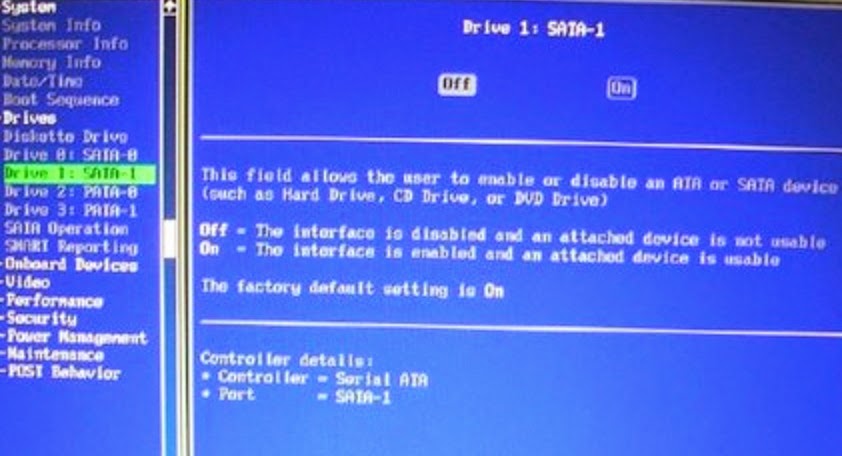 Screen shot showing System Setup section for disk drives:
Faulty or Unplugged Data Cable
Always inspect the motherboard and hard disk connections for bent or misaligned pins. Folding, crimping, pinching, or creasing data cables can cause the wires to break inside the insulation, leaving the exterior of the cable looking normal. When in doubt of data cable condition, replace it.
For SATA cables, Seagate recommends using cables shorter than 39.37 inches (1 meter). For further information, please see Document ID: 182453.
Images of Serial ATA cables. 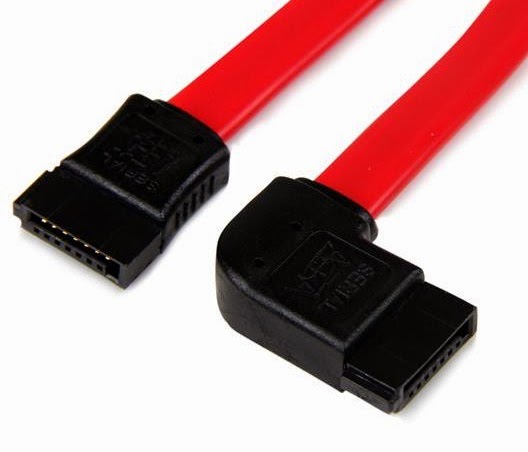
The BIOS will not detect a hard disk if the data cable is damaged or the connection is incorrect.
Serial ATA cables, can sometimes fall out of their connection. Check your SATA cables are tightly connected to the SATA port connection, sometimes you can hear click, from lock.
The easiest way to test a cable is to replace it with another cable. If you still have a problem, then the cable was not the cause.
For ATA drives, use UDMA cabling with a maximum length of 18 inches. UDMA cables have color coded connections which require proper orientation when connecting.
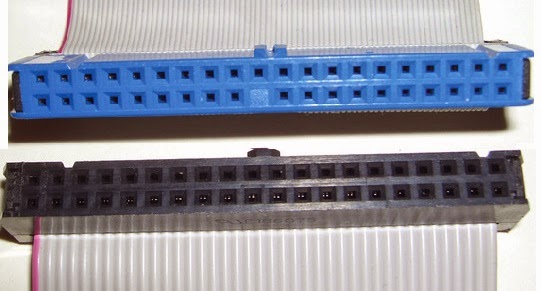 Blue connector - always connects to the motherboard.Grey (middle) connector - is used for slave devices on the cable.Black connector - is used for master device connection.
Faulty Hard Drive
If you have completed the above checks and procedures and the drive is still not properly detected, please attempt to use FreeTools to test the drive. If Tools does not detect the drive after the steps followed above, or an error code that signifies drive failure displays, please proceed to the manufacture Warranty Services page to begin a warranty replacement order.
Tips from Tomshardware website! By Paperdoc on March 16, 2012 2:37:24 AM
First, I dont expect you need to update your BIOS. A lot of people recommend "update your BIOS" whenever the mobo has trouble working with a "large" HDD because that WAS an issue for drives over 128 GB on IDE ports a while back. It has NEVER been an issue for SATA drives.
However, I do recognize that there sometimes are odd problems that can be fixed by BIOS update. If you need or want to do that without an OS installed, your manual (per the reference above from rolli59) shows you how under Section 2.1.2 on p. 2-2. It assumes you will download the latest BIOS file and place it on a USB thumb drive. Then you use a BIOS updating utility already built into your existing BIOS, following the manuals instructions.
Your manual deals with drive configuration in Sections 2.3.3 and 2.3.4 on pp 2-7 and 2-8. It does not indicate that there is any option to Enable or Disable drives, so well assume they are all Enabled. The Main screen of BIOS Setup shows the drives: if your drives are not detected and shown on this screen, you do have a problem. If you know your drives are good but all your SATA devices are Not Detected on this screen, then Id suggest you have a bad mobo.
On the other hand, Im not clear from your post that you are looking at this screen when you say, "BIOS not detecting SATA drives". If this screen does show your SATA units properly, then the BIOS HAS detected them, and you have a different problem, probably in configuration. In Section 2.3.4 you set the SATA Enhanced Mode. IF you are using Win XP in any version, you should set this to P-ATA. But assuming youre using Win7 or Vista, set this to S-ATA to get best use of your drives.
If your CD is the ONLY device on the IDE port, its jumper MUST be set to Master, and it should be plugged into the END connector on the ribbon cable. I would assume that is how it was on the old mobo, but check it.
Are you re-using your drives from before the mobo change? I would assume you are. It sounds like you are trying to Install your OS on one of them, which is a good idea. You probably cannot simply hook up your drives and expect the new mobo to boot from that - at least, not without some work to fix driver problems.
Assuming you are trying to Install to a previously-used HDD, the Install Process may tell you it cannot find any empty drive to Install to. That is NOT because the BIOS is failing to detect. It is because the drives are all "full" - that is, their entire space is assigned to existing Partitions. To do the Install of the OS, you need either to use its tools to Delete all existing Partitions on the ONE HDD youre installing to, or at least to tell it to use one specific Partition (large enough for the job) to Install to. IF you Install to any existing Partition, be aware it will wipe that entire Partition clean and you will lose all its old data.
Thank you Tomshardware website please visit them here!
Durable Greenhouses made from Polycarbonate UV Protected material and Aluminum

ALSO PLEASE VISIT THIS VIDEOS AND SEE IF YOU FIND SOMETHING NEED:
Windows Registry Tools can be downloaded here:
How to kip your PC Private by deleting DATA Permanently
http://askpctech.blogspot.com/2016/03/kip-your-pc-privat.html
This tutorial is made up on request several users, is well is fallowing video:
1)How to Delete Paint Recent Pictures from List in Windows 7
2)Win 7? Fix for ?Safely Remove Hardware and Eject Media? not working How To
3)Windows 10 How to Fix Black Screen After Booting
4)How To Remove Windows 10 Upgrade Notification On Windows 7 And Windows 8
5)How to Delete Face book Page Permanently - 2015
6)How to Uninstall Windows 10 and Downgrade to Windows 7 or 8.1
7)detected: not-a-virus:remoteadmin.win32
8)How to change pictures into icons for folders
9)Speed up your PC Disable System Restore on SSD
10)Speed up your PC Disable Scheduled De-fragmentation SSD
11)2015 Black screen of DEATH Windows 7 & 8 - with cursor at start-up SOLVED
12)Upon start up only wallpaper shows FIX
13)Here is video on Windows 7 & 8 - Black screen with cursor at start-up FIX
You can also open Task Manager by pressing Ctrl+Shift+Esc.
14) I bought a windows 7 PC but it Look alike old PC FIX:
15) Windows 7 & 8 - Black screen with cursor at start-up FIX:
16) How To Fix Minecraft OpenGL Error Windows 7 xp vista 720p :
17) removing bars using regscanner regedit & file shredder 720p:
18) How to Recover windows Explorer from error 2014 720p
19) HOW TO Save on battery online
20) Windows 7 & 8 - Black screen with cursor at start-up FIX
Upon start up only wallpaper shows no icons
CTL+ALT+DEL then click file and new task. then type explorer.exe and press ok
Best Greenhouse system 2015
Available link for download
Wednesday, January 4, 2017
Windows 2000 c windows system32 config missing or corrupted
Windows 2000 c windows system32 config missing or corrupted

I had a problem on a very old Windows 2010 server and I got precedent error and no boot way was available:
"c:windowssystem32config" missing or corrupted
I tried several procedures:
- Last configuratioin restore
- Windows recovery mode.
- Boot from Server CD and going on recovery console and running Chkdsk command
The only solution was to follow this microsoft article:
KB269075
https://support.microsoft.com/en-us/kb/269075
I am focusing on more important commands used:
cd system32config
ren system system.old
ren system.alt systemalt.old
To copy the default System hive, type the following command, and then press ENTER:
copy c:winnt epairsystem c:winntsystem32config
To copy the System hive that was backed up the last time that you ran the Emergency Repair Disk Wizard, type the following command, and then press ENTER:
copy c:winnt epair egbacksystem c:winntsystem32config
In my case there was c:winnt epairsystem.bak file that I copied with this command:
copy c:winnt epairsystem.bak c:winntsystem32config
Available link for download
Wednesday, November 16, 2016
Tips How to Find a Lost Missing Hidden or Removed Network Card NIC
Tips How to Find a Lost Missing Hidden or Removed Network Card NIC
If you have problem with devices and they are not visible in device manager you can follow this procedure:

start --> Administrative command prompt:
set devmgr_show_nonpresent_devices=1
devmgmt.msc
devmgmt.msc
In this Special Device Manager Window; on the menu, click View then Show Hidden Devices
And then you will finally see hidden network cards with problems that you could remove with right click --> uninstall:

Available link for download
Monday, October 31, 2016
Vmware Restarting the Management agents on an ESXi or ESX host 1003490
Vmware Restarting the Management agents on an ESXi or ESX host 1003490
Complete vmware article:
Restarting the Management agents on an ESXi or ESX host (1003490)
Symptoms
- Cannot connect ESXi/ESX to VirtualCenter/vCenter Server
- Cannot connect directly to the ESXi/ESX host from the VMware Infrastructure Client / vSphere Client
- Cannot stop or start a virtual machine
- A virtual machine is shown as running in vCenter Server when it is not
- vCenter Server displays the error:
Virtual machine creation may fail because agent is unable to retrieve VM creation options from the host
Steps that I utilized:
Restarting the Management agents on ESXi
To restart the management agents on ESXi:
From the Direct Console User Interface (DCUI):
- Connect to the console of your ESXi host.
- Press F2 to customize the system.
- Log in as root.
- Use the Up/Down arrows to navigate to Restart Management Agents.
Note: In ESXi 4.1 and ESXi 5.0, 5.1, 5.5 and 6.0 this option is available under Troubleshooting Options. - Press Enter.
- Press F11 to restart the services.
- When the service restarts, press Enter.
- Press Esc to log out of the system.
Available link for download
Subscribe to:
Posts (Atom)